Zynsonix Link

Showing posts with label Headphones. Show all posts

August 17, 2022

Spirit Torino's Super Leggera Headphone Review

I’ve been into HiFi audiophile headphones for a couple of decades now, and the hobby today is probably the biggest it’s ever been. While headphones were invented in the late 19th century, those intended for musical reproduction got their start in the late 50s with the Koss Stereophone in 1958. Koss released numerous quality headphones for decades and remained very popular. In the early 90s, higher-end headphones were having a renaissance of sorts with Sennheiser making the groundbreaking HD580, Grado releasing their SR series, and Sony introducing stellar products like the CD3000. In the 2000s we had AKG release the K701s, Sennheiser the HD600s, Grado the metal-bodied SR-325s, and Beyerdynamic refreshing and marketing its DT series for recreational listening. Into the 2010s and the options have exploded far beyond belief with many more players in the game and brands accommodating many different tastes. One company that really stands out to me is Grado, a small family-run business operating out of New York. 

Grado (pronounced gray-doh) is what I’d consider a conservative business that hasn’t made many changes as the headphone sector has turned into a whirlwind of competition. If you look at the SR125 which was introduced in 1993, it looks nearly the same today, and I’d imagine it is still produced by hand the same way it was back then. There are the plastic grills with discs in the middle noting the model number, plastic gimbals and angled metal rods attaching them to the plastic rod-blocks marked “L” and “R” and looking inside you can see the driver and the wires running to it soldered by hand.

The Grado Hemp Headphones
There’s something very charming about small businesses making hand-made goods in this day and age where everything is becoming automated; that’s probably what I like best about Grados. They refuse to conform and continue their own path, stubbornly ignoring pleas for removable cables and more comfortable pads. It makes them polarizing, with some people dismissing them as cheap looking or antiquated compared to new planar magnetics and dynamic headphones that fully cover the ears, while others embrace their quirks and often buy more than one.

If you haven’t heard a Grado before, they have a general house sound. That would be a little light in the lowest bass, fun punchy sub bass, neutral mids and crisp, forward high energy in the upper mids and highs. As you go up the line they become more resolving and refined (generally). New additions to the stable such as the limited Hemp release and the RS-1X which incorporates hemp in the wood body are voiced a little more warmly which makes them great for longer listening sessions free of fatigue. Just about anyone who’s listened to a Grado will tell you they are great for rock music as you can really feel the energy come through the music.  

So if you try to distill what makes a Grado a Grado and you remove all the intangible brand-equity that comes with a family business making hand-made goods, you’re going to be left with the fairly unique use of rudimentary gimbals with fixed rods that are inserted into rod-blocks which are held by the headband, along with 44-50 millimeter dynamic drivers in a smaller driver cup that doesn’t fully cover the ears. 

Unique engraving options

Andrea Ricci, a fellow Grado enthusiast, started modding headphones using Beyerdynamic and Grado parts in the late 2000s. Creating a company called Spirit Torino, he began offering items for sale in 2016 including the Spirit Labs MMXVI which were Grados with custom engraved metal cups, a new headband, specially tuned SR80e drivers and a custom cable. Other headphones were to come in the following years like the Twin Pulse with isobaric motor unit. Now a full-fledged company with more mature products and distribution outside of Italy, Spirit Torino has become a headphone company that audiophiles should consider when selecting among the other high-end brands available.

While once a curiosity, I was finally able to obtain a demo pair of Spirit Torino headphones for audition. The Super Leggera, which probably resemble Grados the most out of Andrea’s offerings, are nearly all metal, from the cups, the rod-blocks, the rods, the driver grill, etc. The cups are partially anodized and have been CNC engraved. There is a generously sized suede headband with visible stitching and the pads protrude out the way a Grado G cushion would. The pads however are fenestrated suede which are probably about the size of Beyerdynamic DT series pads and look like an offering from Dekoni. The rod-blocks utilize two Allen screws, one holding the headband, and the other allowing you to set the position of the rod more permanently. The second feature is especially important given the weight of the cups, and something that would be welcome on Grado’s larger metal cupped models.


The Spirit Torino with luxurious suede headband and handy locking screws 

These features, along with the weight, come together to give a sense of quality / luxury. Another welcome feature is a removable cable, a feature that really makes far too much sense not to include. Everyone is using different single ended or balanced connectors, everyone has a different space between them and their gear, and if you have pets or are just hard on your gear the cable will likely get damaged, so an easy replacement goes a long way.  

If you like customization, you’ll be very pleased that Spirit Torino headphones come in a variety of different color cups and headbands. Plain black doesn’t get to have all the fun like usual, with vibrant reds, blues, and intricate engravings adorning some models. I get the impression that Andrea really enjoys the CNC machine as so many of the parts have been fashioned with it. I believe Grado also uses a CNC machine for cutting/engraving, however it is limited to the cups.

Beautiful CNC work everywhere you look.

So that’s all good and well, but how do they sound, and how do they stack up against Grados?

This review will be comprised of my initial audition of the Super Leggera, and after I had sent over to Andrea in Italy to have it updated to the latest revision.

My first impressions of the non-upgraded version were very good. I found I liked them best with Todd the Vinyl Junkie (TTVJ) flat pads. Sub-bass was very powerful and succinct, larger than life and probably a bit too much for those looking for a balanced headphone. There was a strong authority to entire sound range where everything was dominant and in-your-face (or ears in this case). The presentation was full, warm, and not much in the way of soundstage. The clarity of the highs is usually reduced a little bit when using the flat pads with Grados, which is also the case here, but many of us like the tradeoff. The early version Super Leggeras are definitely a fun sounding headphone with the flats, but clearly not as refined as something like a Focal Utopia.

Upon speaking with Andrea who runs Spirit Torino, he let me know that there are a couple of important updates that have been added to the units, including a “neodymium magnet enhancement of 3.8 kg” on each driver, and a “Nen Ventilarion” pad system, which may just be a bad Google translation of ventilated. After a short trip to Italy, these two changes had a profound impact on the sound, which went from Ibiza dance club to something more akin to a symphony hall and reminding me of the Grado GS presentation.

If you’re not familiar with the GS-2000e, it doesn’t have the peaky upper midrange that defines the Grado “energetic” house sound, but there is a slight peak there. There is also a pronounced sub-bass energy that seems present with nearly all Grados. The overall sound is both crisp and full. Comparing the GS-2000e ($1,399 USD MSRP) to the Super Leggera ($1,600 USD), the transition from subbass to midrange is the most stand-out change (while still being a little on the punchy). I believe adding the weight to the back of the driver assists to make the transition much smoother. Also present was a wider soundstage, while not as wide as something like the hybrid driver Enigma Acoustic Dharma headphones, there was more of a palpable space, likely created from the new ventilated / fenestrated pads. Other than that, the sound seems a little crisper when it came to guitars, but relatively similar.

You might be wondering why changing headphone pads makes such a marked difference. The sound of dynamic drivers like Grado and Spirit Torino can vary wildly depending on how close they are to your ear. As the driver gets closer to the ear, bass and fullness increase dramatically while treble clarity suffers and soundstage shrinks, and when it’s pulled away all these facets are reversed. Thus, it’s very important to get the position right. I can tell Spirit Torino went to great lengths to not impair the sound by have a very thin fabric between the ear and the driver that is barely there and having the circumaural pads (pads that cover the ears completely) get the driver at a very specific distance from the ear canal. 

Note the perforated cups and attractive CNC-cut grill

The verdict? Honestly, I liked both the original and latest version of the Super Leggera for different reasons. The original made thumping electronica and synthwave wildly exciting, and the latest version worked much better for acoustic guitar and indie rock genres I enjoy such as shoegaze and prog. Compared to the GS-2000e the latest version offers a similar sound with a little more refinement and is built so impressively it’s hard not to gawk at them before putting them on your head. At $1,600 USD I believe it is priced competitively for the sound quality, and very reasonable when you consider the build quality.

Justin of Headamp has been in the headphone hobby 20+ years now and is the U.S. distributor for Spirit Torino. I’ve met him at a few meets and he’s a great fellow. Drop him a line at Headamp.com if you’d like to check out this exciting new offering in the headphone world. 


Please note the Spirit Torino Super Leggera was provided to Zynsonix Audio LLC at a discounted rate for an honest review.

April 15, 2022

High-end Custom Audiophile Headphone Cable for HiFiMan Susvaras

High-end Custom Audiophile Headphone Cable for HiFiMan Susvaras

If you are looking for high-end audiophile wire, ultra pure ohno cast copper, aka UP-OCC, should be on your shortlist. The copper is drawn from much larger crystals so it has a much smoother and cleaner appearance under a microscope versus standard oxygen free copper with a more grainy texture. See below: 


Thanks to it's long grain structure, UP-OCC is commonly used for higher-end audiophile cables. But what if we wanted something even better? Zynsonix now has access to ultra pure, ohno cast silver (UP-OCS) wire known for even better conductivity. 

For this post I'll be assembling a Zynsonix UP-OCS Centurian Octet headphone cable for the HiFiMan Susvaras, easily one of the best headphones on the market. The Susvara's are known to be very unsensitive so that's why the Octet formation is recommended to get the extra juice from your headphone amp or speaker amp to the headphones. 

At the start we will need to hand-braid the UP-OCS silver wire, this is a pair of litz quads which will be running in parallel. 


I like to give the cable a nice snug PTFE Teflon wrap to help reduce unwanted vibration and microphonics. 


Next comes the sleeving. We went with ViaBlue's patterned black, red and white patterned sleeving


The next step is to add the Zynsonix blind embossed leather tag and Y-splitter.


And we can terminate the cable with some Cardas Quadeutectic solder, 3.5mm connectors and a Furutech rhodium plated 4 pin XLR for balanced audio. 


This is an extremely high performing audio cable that does the HiFiMan Susvaras justice. It's also relatively light despite the extra conductors thanks to the hand-braided UP-OCS. If you'd like to hear the best your Susvaras can sound, please check out the Zynsonix Imperial Legate. It can be terminated in any balanced or single-ended rhodium connection including 4 pin XLR, dual 3 pin XLR, 6.3mm TRS, 4.4mm TRRRS, 3.5mm TRS, 2.5mm TRRS, bananas/spades, or SpeakON connector for Benchmark AHB2.


March 18, 2022

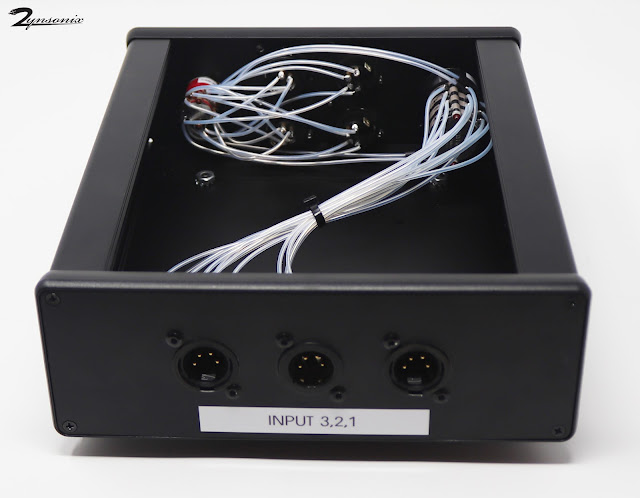
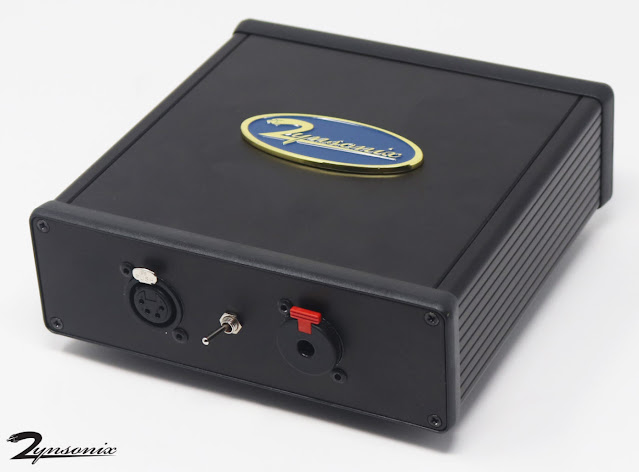
Headphone and Speaker Switchboxes for HiFiMan Susvara

I wanted to show a few different solutions for headphone and speaker switchboxes for the HiFiMan Susvara headphones. Everyone knows these are basically the least sensitive headphones on the market so they need to be powered with a speaker amp to sound their best. Speaker amps weren't really made to power 60 ohm headphones, so it's nice to keep them happy with a load closer to what they were designed to output. Also, if you are using multiple amps or one amp for both headphone and speaker duty, it can be pretty annoying to have to get behind your equipment and swap the spades or bananas every time you need to switch. Thus the need for high quality switches that won't degrade the signal. 


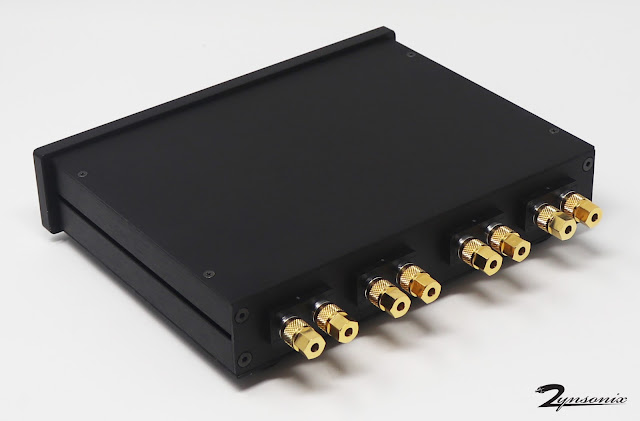
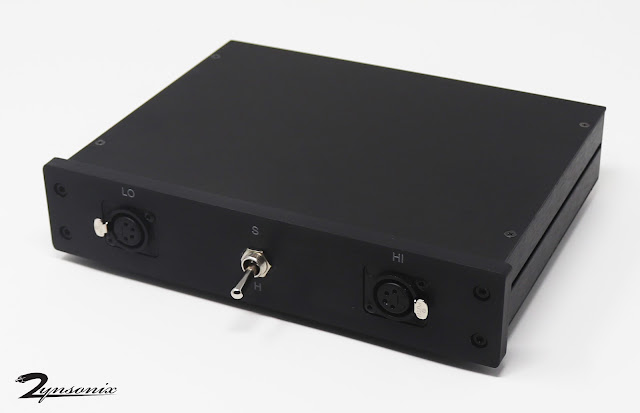
First use case is a gentleman who likes very minimalist looking equipment, thus the limited printed letters on the front. He wanted to be able to use one amp and switch between his Susvaras and his speakers, so simple single switch operation. The headphone outputs are for low sensitivity (Susvaras or HE-6) and high sensitivity for regular headphones. 

This chassis has a 10mm front panel and 2mm for everything else so it has a nice weight to it. This is good for those of you with thick speaker cables. 10mm really has to be machined/milled, most panel mounted parts aren't compatible. In this case we milled so the 4 pin XLRs could be flush mount, and the switch needed some inletting from the back. On the back we have the splendid Cardas CCGS binding posts which are milled copper block covered in gold and rhodium. They're my personal favorite; pricey but you get what you pay for. It also has nice thick aluminum feet with ring dampers but they are hiding underneath. Inside is hand-sleeved high purity soft drawn silver. 


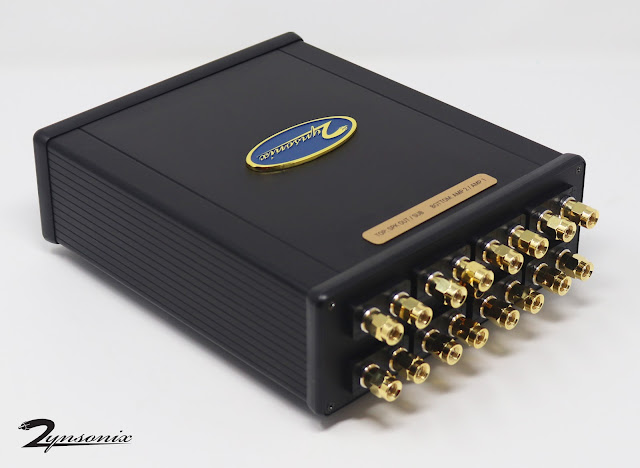
Next we have a slightly more budget oriented build that will allow the user to select one of two amps to either power a pair of speakers or the Susvara headphones. It also has a subwoofer output and an RCA is on the back so the user can ground the chassis to a grounding system if desired.

Engraved brass plates provide identification for the inputs/outputs and functions. This unit utilizes a set of EAR isolation feet.


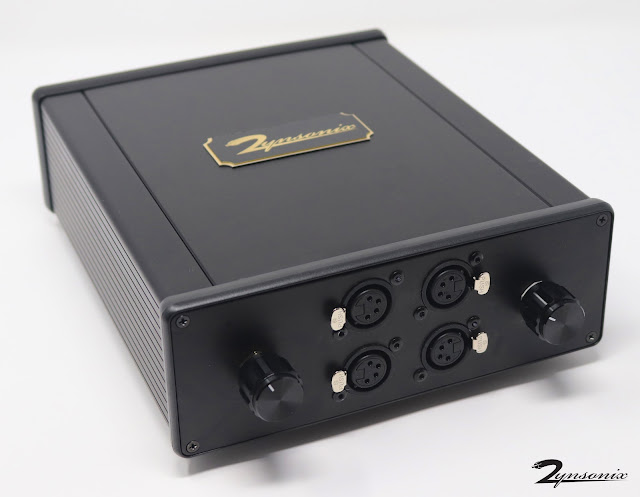
This one isn't necessarily for a Susvara but it allows the user to select between 3 balanced headphone amps and 4 balanced headphones. It features nice Grayhill switches and hand-sleeved high purity soft-drawn silver. The knobs are milled aluminum. The 3 inputs are on the back of the unit. Remember to turn down the amplifiers before switching for two reasons, one tube amps need a load, and two, you could inadvertently switch to a higher sensitivity headphone and the high volume could harm it. 


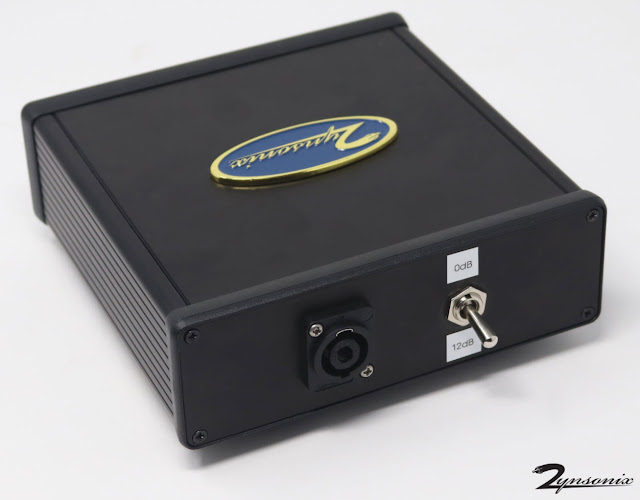
I make a lot of these types of projects but these I found to be some of the more interesting ones. As always you can order a speaker amp to headphone converter that can switch between low and high sensitivity modes, and can switch between 4 pin and 1/4" outputs. This one has a speakON connector for use with a Benchmark AHB2 Amplifier. The Benchmark is a popular choice to use with the Susvaras.


I hope you enjoyed this little gallery. If you need a custom high-end headphone or speaker switcher you know where to find me :) 

If you are trying to power low-sensitivity headphones via a speaker amplifier, please check out the CBOX at Zynsonix.com. It provides a safe consistent load for your amplifier while delivering the juice your headphones need. 


June 1, 2021

Emotiva BasX A-100 Stereo Flex Amplifier Review

This is a review of the headphone output of the Emotiva BasX A-100 Stereo Flex Amplifier. If you’re not familiar, Emotiva makes some great audio products at incredibly attractive price-points. They offer a host of speakers, headphones, amplifiers, processors, and other gear. I have owned their portable DACs which are a tremendous value; I ended up parting ways for lack of need. They were quite good sounding though and offered a robust build quality. I currently have some of their power equipment which is also well built. If I were a home theater afficionado, I’d likely have even more of their gear.

Emotiva has a value-oriented 2 channel amp called the BasX A-100. Normally it is a speaker amp providing 50 watts per channel into 8 Ohms and 80 Watts per channel into 4 Ohms, which is plenty for most setups. What is also pleasing for those with limited in-house real-estate is that the unit is half width, so 8-1/2” wide x 3.125” high x 15” deep. That saves half of your shelf for another piece of equipment/some headphones or something else.

Perhaps what is most interesting about the A-100 is that it can be used as a high-powered headphone amp. Granted, very few people would need this capability, but it is there. The unit does need to be internally jumpered for this operation as it is unsafe for standard headphones. The output is:

8 Ohms:  50 watts / channel
33 Ohms:  12 watts / channel
47 Ohms:  8.5 watts / channel
150 Ohms:  2.6 watts / channel
300 Ohms:  1.3 watts / channel
600 Ohms:  0.6 watts / channel

So, what headphone owners would be interested in this feature? Owners of low-sensitivity headphones like the HiFiMan Susvara, HiFiMan HE-6 or HE-6se, the HEDDPhones, the Abyss AB-1266, and others.

Normally I use an external box with some high quality resistors to convert a speaker amp’s output for headphones (it has some protections built in for amps with output transformers) but given the low cost of the A-100, it was a no-brainer to at least try it out.

Starting with the good news, the A-100 produced plenty of usable volume with the HE-6se and drove them with spades. There are some caveats though. The first, I noticed the amp takes a bit of time to warm up. When listening immediately, the midrange wasn’t well defined. After 10-15 minutes this seems to go away. Second, I found the sound to be fairly cool/bright and slightly lacking on the low end. This isn’t a big deal if you don’t mind EQing. I found reducing the upper midrange and increasing the low range to help make the sound more agreeable for my personal preferences. If you are listening from a computer, you can use the free program PEACE to make adjustments, if not, you can pick up something like the JDS Labs Subjective3 or the Schiit Loki. Neither of these offer an ideal level of control to get the A-100 exactly right (for me), but they are well made and get the job done affordably.


Running the HifiMan HE-6se with the Emotiva A-100


It seems that perhaps the weakest link of the A-100 is its potentiometer (volume control). Early into turning it, there was very noticeable channel imbalance. This seemed to subside quickly as the volume rose; however, it is important to note. A good potentiometer can be costly, so this was likely a price point issue. Given an Alps Blue Velvet (RK27), a frequently used entry-level potentiometer for audio, is around $12 per piece in bulk, it would be very hard to implement at this price level.

You get a lot for your money in terms of parts and build


Overall, the Emotiva BasX A-100 Stereo Flex Amplifier is impressive at its price point given the heft, solid and attractive build, and ability to send 50 WPC to a pair of headphones. Also the internal rectified power supply (no wall wart) is typically reserved for more expensive gear. If you were in the position to have purchased some HiFiMan HE-6 or HE-6se and had very little left over for a suitable amp, this is probably the only game in town, aside from potentially the balanced output of the Schiit Magnius which I haven’t yet tested.

If you were only interested in powering speakers and don’t mind purchasing used gear, you might want to cross-shop an older receiver from a reputable brand like Yamaha, Onkyo, Outlaw, or Denon. If you are DIY-minded, a chip amp like Akitika is a good route to investigate for speakers.   

If you are trying to power low-sensitivity headphones via a speaker amplifier, please check out the CBOX at Zynsonix.com. It provides a safe consistent load for your amplifier while delivering the juice your headphones need. 

July 28, 2020

Removable Balanced Cable Mod for Beyerdynamic DT-1770 Headphones

I'm personally digging the newer, more upscale DT-1770 and DT-1990 from Beyerdynamic. The sound is more balanced and not quite as peaky in the upper midrange. The DT770, 880 and 990 are still incredible values though, and I'd recommend them to anyone looking to get into headphones. 

There's one glaring omission that Beyer could have done better with 1770 and 1990, and that's not using a 4-pin XLR with isolated grounds so the headphones could be run with balanced amps. For a headphone costing nearly $600 and given how little it would cost to implement is a strange business decision. Drop has actually released a version of the 1770 called the DT-177X which uses a 4 pin XLR, so I encourage anyone considering the DT-1770 to get that instead. 


3 pin XLR
3-pin XLR? That's no good!


Fortunately for Beyer fans, the existing units can be modified for balanced amplifiers. This involves removing the 3-pin XLR and much of the existing wiring and isn't very difficult. 

Below you'll see the offending 3-pin XLR which needs to be replaced. To open up the headphones, first the earpads are removed, then pry off the retaining ring using an envelope opener or similar tool. 

Beyerdynamic DT-1770 balanced cable mod 2


Under the retaining ring are the drivers. If you look carefully, there is a little indent on the outer edge of each. Using a small flathead screwdriver, you can apply some pressure to pry up the driver frame and remove it from the cups. This should all be done carefully as to not damage the drivers or the fabric on the driver frame. 

Beyerdynamic DT-1770 balanced cable mod 3


The drivers will often have a number on them. This is likely for matching purposes at the factory. In addition they will have a red dot near one of the wires. This tells you which side is positive. The wires can be trimmed and the drivers removed. Next the headband has to come off to replace the wire between the cups. There are a couple of screws to remove on the plastic brackets and you can then open up the headband and remove the wire. 


Beyerdynamic DT-1770 balanced cable mod 4


Other items that need to come off are the 3-pin mini XLR and the little strain relief pieces. The mini XLR has a plastic ring that screws it in place. There's a little bit of adhesive but it's not difficult to get off. The strain relieve pieces have a metal retaining piece, remove that and pull them out of the cup. They will need to be cleared out inside with a drill or dremel to provide clearance for thicker wire. 


Beyerdynamic DT-1770 balanced cable mod 5


Once everything is out, the replacement wire is soldered to a 4 pin mini XLR (Switchcraft or similar) and is fed through the strain relief pieces (orange circle below) through the headband and out the other side. The plastic pieces holding the headband in place have small indents where the wire enters and exits (red circle below). Inside, a zip tie should be placed right under the strain relief so the wire can't yank on the driver connection if it gets caught, and some light adhesive can be placed, then the metal retaining piece can be reinserted. 

Beyerdynamic DT-1770 balanced cable mod 6


Once everything is in place, you can insert the mini XLR back into the cavity on the bottom of the cup and screw on the stock plastic ring. Use a bit of adhesive or Loctite to ensure this does not come undone. 

Below you'll see the wire running to one of the headphone drivers. Beyerdynamic is now using small pins and a circuit board for ease of assembly. The pins are too small to solder to directly, so the wire should be soldered close to the board with a little bit of room for flexibility. Adhesive heatshrink should be used to prevent shorting. 

If you decide to try and remove the pin jacks and solder directly to the PCB, be very careful as you can damage the diaphragm wire which is quite thin. I personally do not recommend this as you'll likely find yourself buying a new set of drivers, but if you'd like to try it, godspeed. 
 

Beyerdynamic DT-1770 balanced cable mod 7


Once you have everything in place, you can reassemble the headphone. Below you'll see the modded DT1770 Pro (sans earpads, they were retained by the owner) and a spiffy new Zynsonix Ballista cable to go with them. 


Beyerdynamic DT-1770 balanced cable mod 8

Beyerdynamic DT-1770 balanced cable mod 9

Beyerdynamic DT-1770 balanced cable mod 10


I hope you enjoyed this brief tutorial and hope your mod goes well. If you'd prefer someone else have all the fun, please contact Zynsonix Audio who would be happy to handle it for you. 


Disclosure: Please remember that using a soldering iron and/or modifying headphones can be dangerous to you and/or your surroundings and should only be performed by a certified technician. The owner of this blog and all associated parties can not / will not be held responsible if you attempt a modification posted above and cause physical harm to yourself or your surroundings. 

February 4, 2020

AudioQuest NightHawk Carbon Custom Headphone Cable


Unless you’ve been hiding under a rock, you’d know that AudioQuest is one of the most prolific audio cable manufacturers in the business. They also make some other nice stuff including the Dragonfly-series USB DACs and Niagara-series power conditioners. I personally really like their Jitterbug, an inexpensive little USB device that filters the power on your computer’s USB out.

Several years ago, Audioquest released their first foray into the burgeoning headphone market: The Nighthawk. The Nighthawk was priced competitively at $699 when it came out in 2015. It also made use of 3D printed "plastic-wood" cups, which was relatively cutting edge for the time. Since then, there’s been so much fierce competition in this price range that it would be hard to recommend it at its original price (these days I’d recommend the Audeze LCD-2 Classic or MrSpeakers/Dan Clark Audio AEON in this range). 

AudioQuest must have noticed the sea-change in the space, subsequently reducing the price to $599, then to $399, before discontinuing it at a price of $249. Somewhere during this 5-year stint the NightHawk Carbon came out with a revised driver and a closed-model, the NightOwl, came out. The interesting plastic-wood was also replaced with a less unique (and probably less polarizing) shimmering dark blue, not too far from the color-scheme of some Massdrop headphones like the Sennheiser HD-6XX (see 6XX mods here). 

Does the free-falling price-point insinuate that Audioquest's stint into headphones was poorly executed? Not at all, it's actually quite good for a company's first entry in the space. I personally find them a joy to listen to. Their signature is warm, slightly dark, very forgiving of poorly recorded music (think garage indie and alternative rock), and provide good bass quality and quantity. They’re well suited for movies and videogames in addition to music. They’re also very easy to drive with a 25-ohm impedance, and they’re light and comfortable. Some other niceties include a substantial travel case, two different pairs of earpads in the box (leather and velour), and a headphone cable with a microphone built in.

Oddly, the headphone cable is only four feet, which is a length typically reserved for headphones that are intended for mostly portable use. Given the NightHawk is semi-open and is not foldable, this is an odd choice, but fortunately solvable given the cable is user replaceable.

Given the Nighthawks are on the dark/warm side of things, a crisp-sounding cable will help bring the details out and give the headphone a more balanced sound. I chose the Xev, which is silver-clad copper in PTFE, rather than an all-copper or litz copper solution. Had the headphone been more detailed to start, a copper cable would work perfectly well.

The Xev is a hand-braided litz of four isolated 24 gauge silver-clad copper wires sleeved in soft black nylon multifilament from TechFlex. 


The NightHawk makes use of 2.5mm TS connectors, where the sleeve is ground/negative, and the tip is signal/positive. They need to be slim fit or you'll run into issues. Eidolic makes a nice connector that fits the requirements as of this writing, and you can find solutions on AliExpress as well.


Below is a photo of the completed Xev cable, flexible and lightweight with plenty of length for those of us that need more than 4 feet. 


The sound is notably more balanced with more prominent treble, making it a definite keeper. 


If you are interested in the NightHawk Carbon, I'd suggest picking one up soon, as they are discontinued and AudioQuest has released a letter to distributors indicating they don't plan to offer any subsequent headphones, at least not in the immediate future. For the current price, build quality and extras, I could see this being a great first step into audiophile headphones, although one should also check out the Sennheiser/Massdrop HD-6XX, it's a hard value to beat.

To order a custom cable for the NightHawk, NightHawk Carbon, NightOwl, or many other headphones, please visit Zynsonix.com today.


July 17, 2018

Cable and Mods for Sennheiser Massdrop HD6XX

Back in 2004 I purchased my first serious pair of headphones, a pair of Sennheiser HD600s. This was an introduction to a number of new concepts for me: headphones that are open, benefit from an amp, are sensitive to different cables, and are intended to be listened to at home (where you could be listening to speakers, sacrilege in some circles! haha).

In these formative days of headphone audiophilea I recall being at a meet in College Park, MD where there were a number of HD600s and HD650s. We were auditioning cables by Cardas, Stefan AudioArt and other DIY concoctions including pure silver cables. It was amazing what a difference the cable could make to the signature.

I'd long since sold my HD600s and HD650s and moved on to other headphones like Audeze, when I saw Massdrop and Sennheiser teamed up to released the HD6XX. The HD6XX is quite literally a more affordably produced HD650 (based on Inner Fidelity's measurements). I figured for $200 it would be fun to have a listen to the Sennheiser house sound once again, and see how good it could sound with a balanced amp and some tweaks.

If you're not familiar with Massdrop, it's an interesting business model where the company has a number of people commit to buy a product at a discounted price. Generally there are a certain number of buyers required to make the "drop" happen, and once it does, it can take months before you have a product in your hand. The upside is you can get some incredibly good deals so long as you're patient. Massdrop also teams up with manufactures to produce one-off products at a sizable discount, such as the Focal Elex, AKG M220 Pro, HiFiMan HE-4XX and other headphones which are a little different from what's on store shelves. The Sennheiser HD6XX is such an animal.

Looking at the HD6XX versus the HD650, you'll note the HD6XX has a dark blue headband versus silver and the screen printed "Sennheiser" on the top of the band is more subtle. I personally think the HD650 color scheme is a little easier on the eyes, but given this relatively superficial difference shaves $150+ off of the street price of the HD650s and still sounds identical, the choice is a veritable no-brainer.

The stock HD6XX

Given you're saving big bucks on the HD6XX, those dollars should go toward making them even better, right? I'll be going over a few tweaks you can do for improvements in sound, comfort, and looks.

One thing I couldn't be happier about is the trend toward calfskin earpads in the past decade. Exposed foam and velour don't feel all that great against my skin. The Sennheiser HD580, 5XX, 600, 650 and 6XX all feature velour pads, but fortunately there are companies producing replacement pads. I've found the Dekoni fenestrated pads are quite comfortable while allowing breath-ability. The pads snap in place on the frame and are quick and easy to install and uninstall.


Even with the new pads, the HD6XXs look a little dull, easily glanced over when looking at newer headphone designs with chrome and carbon fiber. I decided to reach out to Larry at Headphile to see about getting some custom wood cups. 

Talking about Headphile with some of the old-heads at HeadFi will elicit smiles and good memories. Larry's been at it for quite some time, and for a little while there, the "Darth Beyers", which were Beyerdynamic DT770 headphones modified with wood cups, were one of the most popular cans on HeadFi. Every now and then you'll see a pair pop up for sale, and if you like bass, I'd recommend you give 'em a shot. In addition, if you have the scratch, Larry is still building them with a number of wood choices... although I don't know if he's still building the deep versions (which I most favored). 

I chose Padauk (pronounced Pah-duke) wood as it's reasonably priced and has a nice reddish hue, which will pop on the dark HD6XX. Larry offers the cups open with screens or closed. The open versions sound pretty much identical to the stock screens with perhaps a tiny bit more reverb, and the closed versions have notably more reverberations (or a chamber-like effect) depending on what sort of damping is applied inside. 

The installation process is quick and painless. The screens are pressure fit on the frame, and using a spoon or similar utensil (I used an avocado knife) you can slowly pull the screen away from the frame and remove it. 

The screens can be removed easily with a spoon (or avocado knife)

The difference in color and presentation is night and day from the new wood cups and the existing stock screens. 

Headphile wood cups versus stock screens


Installation is completed on each side using a set of 4 brass wood screws. 


You will need to adjust the tension of each screw to ensure it has adequately threaded into the wood, but is not impeding on the cavity for the cable plug insert, otherwise the cable will either not insert at all or will be super tight.  


The HD650 (and HD6XX) is a warm-sounding headphone, no doubt about it. It can be a little too warm and rolled-off in the highs for some. This is where a cable comes into play. I opted to build a Zynsonix Xev cable for the HD6XX. While the most affordable in the line, it features silver-clad conductors, low-strand count and a PTFE (Teflon) dielectric, giving it a forward and detailed sound signature. It's exactly what the HD6XX needs, pushing forward the treble, resolving the bass, and giving the headphones a far more dynamic presentation. 


I wasn't sure if I would keep the HD6XX, it was more of an entertaining experiment, however with these mods the enhanced comfort and sound really make it a winner and a definite keeper. Headphone enthusiasts these days are quite lucky, as it would be very hard to reach this level of sonic performance at this price years ago. 

If you'd like a Xev cable made to your specifications (whatever length, sleeving, and termination you'd like), please reach out to Zynsonix today and take your Sennheisers to the next level. 


Zynsonix Audio, LLC does not have any relationship or financial interest in the companies mentioned in this post, including Headphile, Massdrop, Sennheiser, Inner Fidelity, Dekoni, etc.