Zynsonix Link

Showing posts with label hifi. Show all posts

August 17, 2022

Spirit Torino's Super Leggera Headphone Review

I’ve been into HiFi audiophile headphones for a couple of decades now, and the hobby today is probably the biggest it’s ever been. While headphones were invented in the late 19th century, those intended for musical reproduction got their start in the late 50s with the Koss Stereophone in 1958. Koss released numerous quality headphones for decades and remained very popular. In the early 90s, higher-end headphones were having a renaissance of sorts with Sennheiser making the groundbreaking HD580, Grado releasing their SR series, and Sony introducing stellar products like the CD3000. In the 2000s we had AKG release the K701s, Sennheiser the HD600s, Grado the metal-bodied SR-325s, and Beyerdynamic refreshing and marketing its DT series for recreational listening. Into the 2010s and the options have exploded far beyond belief with many more players in the game and brands accommodating many different tastes. One company that really stands out to me is Grado, a small family-run business operating out of New York. 

Grado (pronounced gray-doh) is what I’d consider a conservative business that hasn’t made many changes as the headphone sector has turned into a whirlwind of competition. If you look at the SR125 which was introduced in 1993, it looks nearly the same today, and I’d imagine it is still produced by hand the same way it was back then. There are the plastic grills with discs in the middle noting the model number, plastic gimbals and angled metal rods attaching them to the plastic rod-blocks marked “L” and “R” and looking inside you can see the driver and the wires running to it soldered by hand.

The Grado Hemp Headphones
There’s something very charming about small businesses making hand-made goods in this day and age where everything is becoming automated; that’s probably what I like best about Grados. They refuse to conform and continue their own path, stubbornly ignoring pleas for removable cables and more comfortable pads. It makes them polarizing, with some people dismissing them as cheap looking or antiquated compared to new planar magnetics and dynamic headphones that fully cover the ears, while others embrace their quirks and often buy more than one.

If you haven’t heard a Grado before, they have a general house sound. That would be a little light in the lowest bass, fun punchy sub bass, neutral mids and crisp, forward high energy in the upper mids and highs. As you go up the line they become more resolving and refined (generally). New additions to the stable such as the limited Hemp release and the RS-1X which incorporates hemp in the wood body are voiced a little more warmly which makes them great for longer listening sessions free of fatigue. Just about anyone who’s listened to a Grado will tell you they are great for rock music as you can really feel the energy come through the music.  

So if you try to distill what makes a Grado a Grado and you remove all the intangible brand-equity that comes with a family business making hand-made goods, you’re going to be left with the fairly unique use of rudimentary gimbals with fixed rods that are inserted into rod-blocks which are held by the headband, along with 44-50 millimeter dynamic drivers in a smaller driver cup that doesn’t fully cover the ears. 

Unique engraving options

Andrea Ricci, a fellow Grado enthusiast, started modding headphones using Beyerdynamic and Grado parts in the late 2000s. Creating a company called Spirit Torino, he began offering items for sale in 2016 including the Spirit Labs MMXVI which were Grados with custom engraved metal cups, a new headband, specially tuned SR80e drivers and a custom cable. Other headphones were to come in the following years like the Twin Pulse with isobaric motor unit. Now a full-fledged company with more mature products and distribution outside of Italy, Spirit Torino has become a headphone company that audiophiles should consider when selecting among the other high-end brands available.

While once a curiosity, I was finally able to obtain a demo pair of Spirit Torino headphones for audition. The Super Leggera, which probably resemble Grados the most out of Andrea’s offerings, are nearly all metal, from the cups, the rod-blocks, the rods, the driver grill, etc. The cups are partially anodized and have been CNC engraved. There is a generously sized suede headband with visible stitching and the pads protrude out the way a Grado G cushion would. The pads however are fenestrated suede which are probably about the size of Beyerdynamic DT series pads and look like an offering from Dekoni. The rod-blocks utilize two Allen screws, one holding the headband, and the other allowing you to set the position of the rod more permanently. The second feature is especially important given the weight of the cups, and something that would be welcome on Grado’s larger metal cupped models.


The Spirit Torino with luxurious suede headband and handy locking screws 

These features, along with the weight, come together to give a sense of quality / luxury. Another welcome feature is a removable cable, a feature that really makes far too much sense not to include. Everyone is using different single ended or balanced connectors, everyone has a different space between them and their gear, and if you have pets or are just hard on your gear the cable will likely get damaged, so an easy replacement goes a long way.  

If you like customization, you’ll be very pleased that Spirit Torino headphones come in a variety of different color cups and headbands. Plain black doesn’t get to have all the fun like usual, with vibrant reds, blues, and intricate engravings adorning some models. I get the impression that Andrea really enjoys the CNC machine as so many of the parts have been fashioned with it. I believe Grado also uses a CNC machine for cutting/engraving, however it is limited to the cups.

Beautiful CNC work everywhere you look.

So that’s all good and well, but how do they sound, and how do they stack up against Grados?

This review will be comprised of my initial audition of the Super Leggera, and after I had sent over to Andrea in Italy to have it updated to the latest revision.

My first impressions of the non-upgraded version were very good. I found I liked them best with Todd the Vinyl Junkie (TTVJ) flat pads. Sub-bass was very powerful and succinct, larger than life and probably a bit too much for those looking for a balanced headphone. There was a strong authority to entire sound range where everything was dominant and in-your-face (or ears in this case). The presentation was full, warm, and not much in the way of soundstage. The clarity of the highs is usually reduced a little bit when using the flat pads with Grados, which is also the case here, but many of us like the tradeoff. The early version Super Leggeras are definitely a fun sounding headphone with the flats, but clearly not as refined as something like a Focal Utopia.

Upon speaking with Andrea who runs Spirit Torino, he let me know that there are a couple of important updates that have been added to the units, including a “neodymium magnet enhancement of 3.8 kg” on each driver, and a “Nen Ventilarion” pad system, which may just be a bad Google translation of ventilated. After a short trip to Italy, these two changes had a profound impact on the sound, which went from Ibiza dance club to something more akin to a symphony hall and reminding me of the Grado GS presentation.

If you’re not familiar with the GS-2000e, it doesn’t have the peaky upper midrange that defines the Grado “energetic” house sound, but there is a slight peak there. There is also a pronounced sub-bass energy that seems present with nearly all Grados. The overall sound is both crisp and full. Comparing the GS-2000e ($1,399 USD MSRP) to the Super Leggera ($1,600 USD), the transition from subbass to midrange is the most stand-out change (while still being a little on the punchy). I believe adding the weight to the back of the driver assists to make the transition much smoother. Also present was a wider soundstage, while not as wide as something like the hybrid driver Enigma Acoustic Dharma headphones, there was more of a palpable space, likely created from the new ventilated / fenestrated pads. Other than that, the sound seems a little crisper when it came to guitars, but relatively similar.

You might be wondering why changing headphone pads makes such a marked difference. The sound of dynamic drivers like Grado and Spirit Torino can vary wildly depending on how close they are to your ear. As the driver gets closer to the ear, bass and fullness increase dramatically while treble clarity suffers and soundstage shrinks, and when it’s pulled away all these facets are reversed. Thus, it’s very important to get the position right. I can tell Spirit Torino went to great lengths to not impair the sound by have a very thin fabric between the ear and the driver that is barely there and having the circumaural pads (pads that cover the ears completely) get the driver at a very specific distance from the ear canal. 

Note the perforated cups and attractive CNC-cut grill

The verdict? Honestly, I liked both the original and latest version of the Super Leggera for different reasons. The original made thumping electronica and synthwave wildly exciting, and the latest version worked much better for acoustic guitar and indie rock genres I enjoy such as shoegaze and prog. Compared to the GS-2000e the latest version offers a similar sound with a little more refinement and is built so impressively it’s hard not to gawk at them before putting them on your head. At $1,600 USD I believe it is priced competitively for the sound quality, and very reasonable when you consider the build quality.

Justin of Headamp has been in the headphone hobby 20+ years now and is the U.S. distributor for Spirit Torino. I’ve met him at a few meets and he’s a great fellow. Drop him a line at Headamp.com if you’d like to check out this exciting new offering in the headphone world. 


Please note the Spirit Torino Super Leggera was provided to Zynsonix Audio LLC at a discounted rate for an honest review.

March 18, 2022

Headphone and Speaker Switchboxes for HiFiMan Susvara

I wanted to show a few different solutions for headphone and speaker switchboxes for the HiFiMan Susvara headphones. Everyone knows these are basically the least sensitive headphones on the market so they need to be powered with a speaker amp to sound their best. Speaker amps weren't really made to power 60 ohm headphones, so it's nice to keep them happy with a load closer to what they were designed to output. Also, if you are using multiple amps or one amp for both headphone and speaker duty, it can be pretty annoying to have to get behind your equipment and swap the spades or bananas every time you need to switch. Thus the need for high quality switches that won't degrade the signal. 


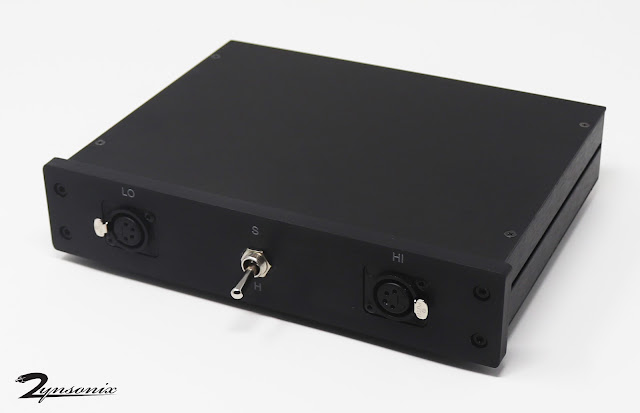
First use case is a gentleman who likes very minimalist looking equipment, thus the limited printed letters on the front. He wanted to be able to use one amp and switch between his Susvaras and his speakers, so simple single switch operation. The headphone outputs are for low sensitivity (Susvaras or HE-6) and high sensitivity for regular headphones. 

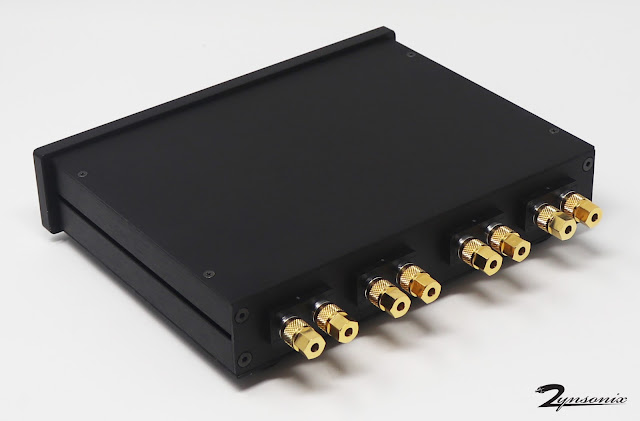
This chassis has a 10mm front panel and 2mm for everything else so it has a nice weight to it. This is good for those of you with thick speaker cables. 10mm really has to be machined/milled, most panel mounted parts aren't compatible. In this case we milled so the 4 pin XLRs could be flush mount, and the switch needed some inletting from the back. On the back we have the splendid Cardas CCGS binding posts which are milled copper block covered in gold and rhodium. They're my personal favorite; pricey but you get what you pay for. It also has nice thick aluminum feet with ring dampers but they are hiding underneath. Inside is hand-sleeved high purity soft drawn silver. 


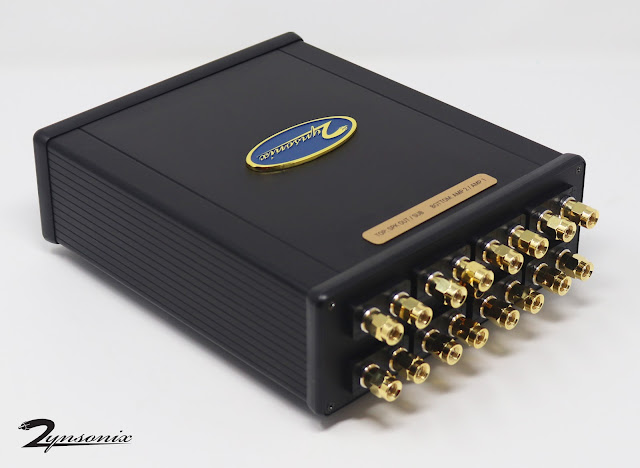
Next we have a slightly more budget oriented build that will allow the user to select one of two amps to either power a pair of speakers or the Susvara headphones. It also has a subwoofer output and an RCA is on the back so the user can ground the chassis to a grounding system if desired.

Engraved brass plates provide identification for the inputs/outputs and functions. This unit utilizes a set of EAR isolation feet.


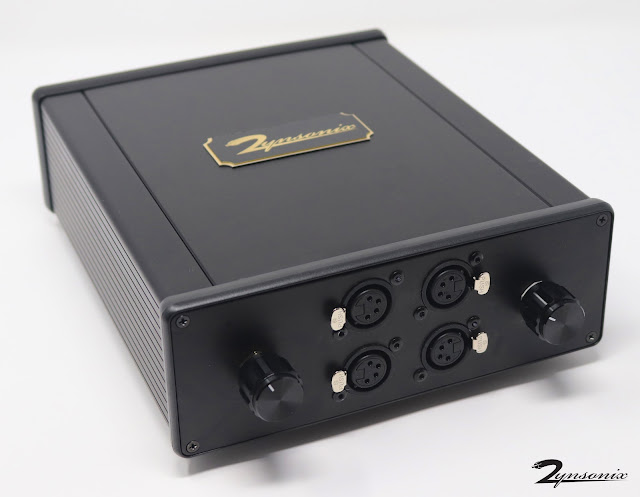
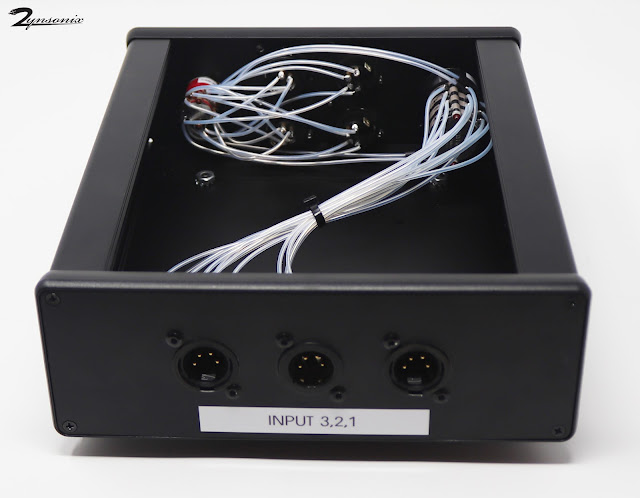
This one isn't necessarily for a Susvara but it allows the user to select between 3 balanced headphone amps and 4 balanced headphones. It features nice Grayhill switches and hand-sleeved high purity soft-drawn silver. The knobs are milled aluminum. The 3 inputs are on the back of the unit. Remember to turn down the amplifiers before switching for two reasons, one tube amps need a load, and two, you could inadvertently switch to a higher sensitivity headphone and the high volume could harm it. 


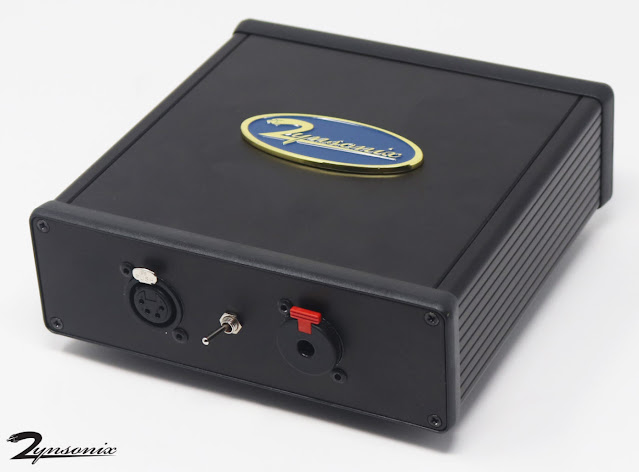
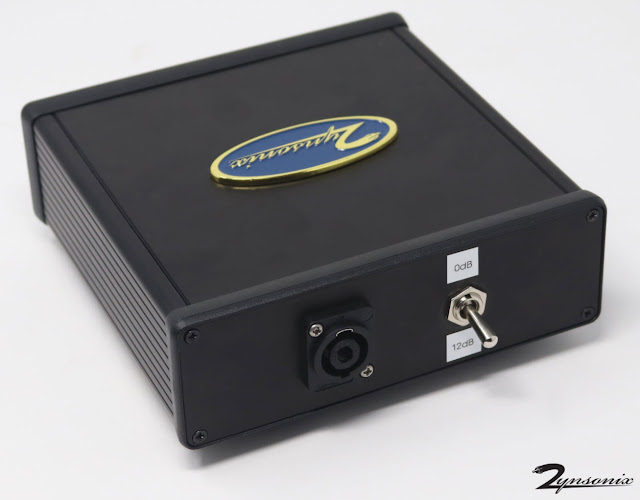
I make a lot of these types of projects but these I found to be some of the more interesting ones. As always you can order a speaker amp to headphone converter that can switch between low and high sensitivity modes, and can switch between 4 pin and 1/4" outputs. This one has a speakON connector for use with a Benchmark AHB2 Amplifier. The Benchmark is a popular choice to use with the Susvaras.


I hope you enjoyed this little gallery. If you need a custom high-end headphone or speaker switcher you know where to find me :) 

If you are trying to power low-sensitivity headphones via a speaker amplifier, please check out the CBOX at Zynsonix.com. It provides a safe consistent load for your amplifier while delivering the juice your headphones need. 


October 4, 2016

Fostex T50RP mk III Modded Build - New Cups, Cable, the works!

If you've been following my posts you'll see I usually leave audio products alone once I get them ... kidding ;) I picked up a Fostex T50RP mk3 (or mk III, however you want to write it) so I could see the differences from the original T50RP I modded. Other than a different headband, removeable cable, and different handling of the felt behind the driver, there was no difference, so I suggest if you are already modding, go with the original as it's cheaper and you can set up the felt however you like. If you still want the mk3, You may consider purchasing across the pond, it seems like Fostex has a deal with U.S. retailers that they can't advertise below $159.99, but it averages around $130 in the UK... much more palatable as you're replacing everything anyway.

The headband is worlds better than the original model

The removable cable was a nice new feature on the mk III

I had some very nice wood cups CNC cut for me by my friend Fewzi (if you'd like his contact information, shoot me a message, we're hoping to offer at Zynsonix soon), the quality of the machining is excellent, perfect driver fit. CNC machining has really changed the way a lot of things are manufactured in a positive way, the amount of precision it offers is outstanding. Anyway, the wood cups rock. There is the cup itself, a second wood layer with a square hole that holds the driver in place, and a third plastic layer that holds the ear pads in place.

Driver frame and wood cup, ultimate precision

This picture below shows a wood ring and plastic ring for the earpads, Fewzi discovered that plastic was more durable for the earpads to stretch over (it's a tight fit). 


First the stock pads and foam are removed.


Then the driver frame is unscrewed (4 screws), and the driver unscrewed from the frame (3 screws). There is an extremely thin gasket that sandwiches between the driver and frame that needs to be handled gently. 


The drivers are snipped free and then I had to remember how to get the cups off. I didn't want to read my existing post because I enjoy discovering how things come apart and go back together. Fostex hides the screw behind a thin shroud of plastic, which I believe is sonically welded in place (micro-vibrations that fuse plastic together). It comes off with a razor, and once unscrewed, releases the clamp on the other side.


That's about the only unusual aspect of the assembly. Once everything is apart, the wood cup was fitted. There are little brass fittings included with the wood cup (the original plastic ones are too small) that allow the cup to pivot when screwed in, I found the sizing of the brass fitting and tightness of the screw makes a huge difference in the articulation. 

If anyone has heard a T50RP,  modified or otherwise, they know there is no lacking in the bass department. this is where mass damping plays an interesting part. Adding loaded sheets like Dynamat Xtreme can help curtail flabby bass and tighten things up. Adding foam with a texture can also assist with reducing reverberation / standing waves in the cup. 


The cups included 3.5mm mini inlets, which are great, but I personally like the mini XLR for headphones due to it's locking mechanism, and I could configure it the same as Audeze headphones, which you can read more about here. The driver is fastened on to the wood frame, which was a fantastic fit, with the gasket in place. Wiring up is a simple ordeal, but I wanted to ensure all the original solder was removed so I could replace the tin solder with Cardas Quadeutectic solder. The tabs are marked with a "+" and "-". Below you have a view of both sides being soldered in. 


Once the drivers are happy, the frame is lined up on the cup and it's important to ensure no stress is on the solder pads, so loose wiring is okay here. Then the earpad frames are sat on top and four screws replaced. The foam that was set aside in the first step is replaced in each cup. 


This could be no exciting rebuild without fancy pads. Fortunately there are a couple different types available from ZMF (run by Zack, cool bro), and MrSpeakers. ZMF has a number of pads available, including lambskin, cowhide, protein, and Omni. MrSpeakers offers the Alphapads which are lambskin. Lambskin seems to be the most popular headphone pad material for higher end headphones, for which I am glad, I hate velvet ;) ZMF also has a nice "pilot pad" to provide some extra cushion on the top of your head.

ZMF lambskin earpads and pilot pad

Now that we're all padded up, we have what appears to be a finished headphone, but wait...


...where's the cable you ask?! We won't have any sound if we don't have a cable. Where will we get a cable from?

Image result for gasp cartoon

Fortunately, we have the brand new Zynsonix Ballista cable here, featuring 28 strands of ultra pure ohno cast copper, 12 of which are clad with high purity silver in an alternating geometry, then each are electrically isolated with a clear coat, fed through low loss dielectric, resulting in an extremely well balanced sound with great detail retrieval... completely custom made for Zynsonix. 


There we go, now we're talking! 

I'm now going to reveal a special secret that will enhance your life forever make your cans sound better... you can get the Zynsonix Ballista configured for pretty much any headphone you have. It's the best cable I've made to date, I spared no expense, because you guys deserve it. Use the handy dandy contact link to share what you need. Also if you are interested in purchasing some great sounding cups, feel free to reach out as well. Fewzi is experimenting with some additional woods now, so there should be a variety of species to choose from. 

Anyway, that's all from me. Happy listening, building, etc. and don't be a stranger.


Disclaimer: The above steps detailing the building of a headphone are for entertainment purposes only and not intended to be used as directions. The owner of this blog and all associated parties can not / will not be held responsible if you attempt the process posted and cause physical harm to yourself, your surroundings or your property.